
Expert Picks for Warehouse Exhaust Fan Installation Equipment
Discover reliable and high-performance products tailored for seamless warehouse exhaust fan setup and optimal airflow management.
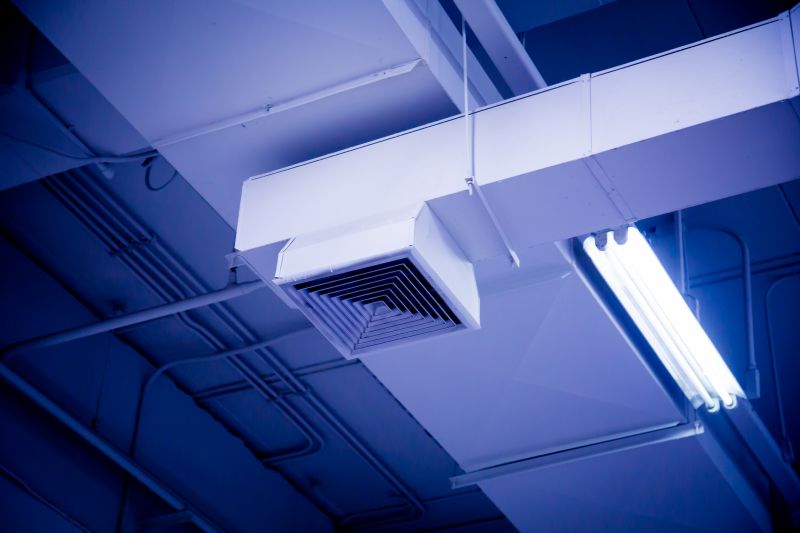 Warehouse exhaust fan installations are essential components for maintaining proper air circulation and ventilation in large industrial or commercial spaces. These systems help in removing stale air, fumes, dust, and excess heat, contributing to a safer and more comfortable working environment. Selecting the right products for these installations involves understanding various factors such as airflow capacity, durability, noise levels, and compatibility with existing infrastructure. Properly chosen exhaust fans can improve air quality and help meet safety standards, making them a vital investment for warehouse operations.
Top Overall Option
Industrial Grade Axial Exhaust Fan
An industrial grade axial exhaust fan offers a versatile and reliable solution for large warehouse ventilation needs. Designed for high airflow capacity and durability, it features corrosion-resistant materials and adjustable speed controls. Its robust construction makes it suitable for continuous operation in demanding environments, helping to maintain air quality and safety standards effectively.
Types of Products For Warehouse Exhaust Fan Installations
Wall-Mounted Exhaust Fans
Ideal for direct installation on warehouse walls, these fans are easy to access and maintain, suitable for smaller to medium-sized spaces.
Roof-Mounted Exhaust Fans
Designed for rooftop installation, these fans facilitate large airflow movement and are often used in extensive warehouse facilities.
Centrifugal Exhaust Fans
These fans generate high pressure and are effective at moving air through duct systems, suitable for complex ventilation setups.
Inline Exhaust Fans
Inline fans are installed within ductwork to provide efficient airflow and are often used in conjunction with other ventilation components.
Explosion-Proof Exhaust Fans
Designed for hazardous environments, these fans prevent ignition of flammable vapors, ensuring safety in specific warehouse conditions.
High-Temperature Exhaust Fans
Built to withstand elevated temperatures, these fans are suitable for warehouses handling hot materials or processes.
Quiet Operation Fans
Featuring sound-dampening technology, these fans reduce noise levels while maintaining airflow efficiency.
Variable Speed Exhaust Fans
Allow for adjustable airflow rates, providing flexibility to match ventilation needs and optimize energy use.
Energy-Efficient Fans
Designed to minimize power consumption while delivering adequate airflow, suitable for long-term operational savings.
Corrosion-Resistant Fans
Constructed with materials resistant to corrosion, ideal for warehouses with high humidity or chemical exposure.
Portable Exhaust Fans
Compact and mobile, these fans can be moved as needed to target specific areas within the warehouse.
Smart Ventilation Fans
Equipped with remote control or automation features for convenient operation and integration with building management systems.
Popular Choices
Widely used in large-scale ventilation, these fans are valued for their high airflow capacity and straightforward installation.
Commonly installed on rooftops, these fans are favored for their ability to move large volumes of air efficiently.
Popular for integrating into duct systems, these fans provide efficient airflow control in complex ventilation setups.
Chosen for hazardous environments, these fans are designed to prevent ignition and ensure safety compliance.
Preferred in environments where noise reduction is important, these models help maintain a quieter workspace.
Offering adjustable airflow, these fans are favored for their flexibility and energy management capabilities.
Popular in humid or chemical-heavy environments, these fans resist deterioration over time.
Valued for reducing operational costs, these fans deliver performance with lower power consumption.
Flexible and easy to move, these fans are useful for targeted ventilation in specific areas.
Incorporating automation and remote control features, these fans are increasingly popular for modern warehouses.
When considering exhaust fans for warehouse applications, it is important to evaluate the size of the space, the volume of air that needs to be moved, and the frequency of use. Larger warehouses may require high-capacity fans capable of moving significant volumes of air efficiently. In addition, features such as corrosion resistance, ease of maintenance, and energy efficiency can influence the long-term performance and operational costs of the system. Installation options vary from wall-mounted units to roof-mounted systems, each suited to different building layouts and operational needs.
Selecting a suitable exhaust fan also involves assessing the noise levels, especially in environments where noise pollution can impact worker productivity or safety. Some models come with sound-dampening features or adjustable speeds to optimize performance while minimizing noise. Compatibility with existing electrical systems and controls is another consideration, as modern fans often include smart features or remote operation capabilities. Ultimately, choosing the right products requires balancing performance, durability, and cost-effectiveness to ensure a safe and efficient warehouse environment.
Key Buying Considerations
- Determine the required airflow capacity based on warehouse size and ventilation needs.
- Evaluate the durability and materials used to ensure longevity in demanding environments.
- Consider noise levels and look for models with sound-dampening features if noise is a concern.
- Assess the installation options—wall-mounted, roof-mounted, or ducted—to match your facility layout.
- Check for corrosion resistance if the environment involves moisture or chemicals.
- Look for energy-efficient models to reduce operational costs over time.
- Examine control features such as variable speed settings or remote operation for convenience.
- Ensure compatibility with existing electrical systems and automation setups.
- Review maintenance requirements and ease of access for routine servicing.
- Consider safety features like explosion-proof design if working in hazardous conditions.
- Identify if the fan needs to be rated for high temperatures or hazardous environments.
- Evaluate the size and weight of the unit for ease of installation and structural support.
- Investigate warranty and after-sales support options for long-term reliability.
- Compare initial costs with potential energy savings and maintenance expenses.